

Ocean and inland waters (lakes, rivers and reservoirs) provide significant benefits to humanity, encompassing;
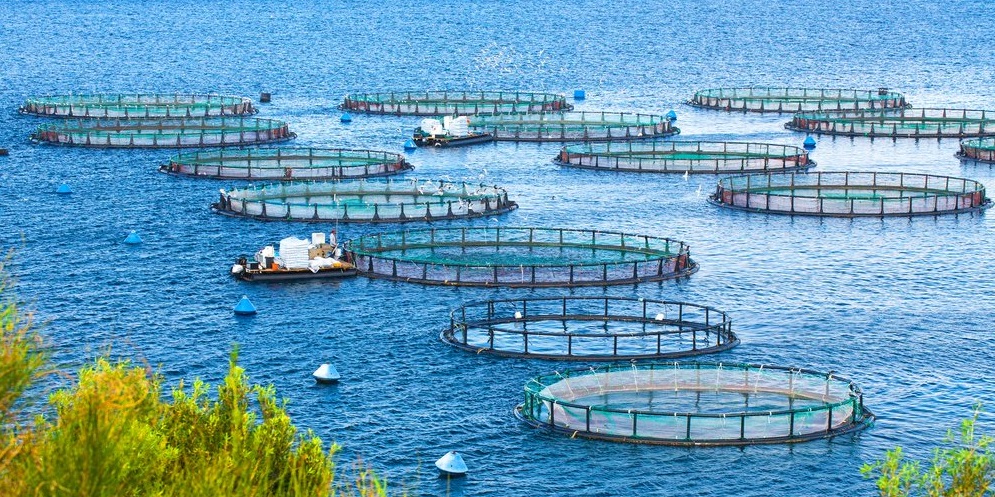
Fisheries and aquaculture supply 17 percent of global animal proteins and support livelihoods of about 660– 820 million livelihoods (or 10–12 percent of the world’s population). Currently 3 billion people depend on fish for twenty percent of their average per capita intake of animal protein. It is greater for the Low Income Food Deficit Countries (LIFDCs) and much greater for the population of many SIDS. More than 40 percent of the global population lives within 100 kilometers of the coast. Thirteen of the world’s 20 mega-cities lie along coasts. Nearly 700 million people live in low-lying coastal areas less than 10 meters above sea level. Over 90 percent of the livelihoods that are directly dependent on fisheries and aquaculture occur in developing countries, mostly in small-scale operations.
Marine ecosystem services have substantial economic value. While exact figures are still debated, the estimated figures are in the order of trillions of US dollars annually. Nearly three-quarters of this value resides in coastal zones. These ecosystem services offer a renewable opportunity to meet basic human needs, support a healthy and sustainable economy, and provide jobs for a growing global population. Aquatic ecosystems act as important reservoirs for inorganic carbon with the oceans storing roughly 50 times more carbon dioxide (CO2) than the atmosphere; ecosystems such as mangroves, seagrasses, and inland waters are among the most efficient ecosystems in sequestering CO2 in the form of ‘blue carbon’ sinks.
They can sequester up to five times the amounts of carbon absorbed by tropical forests and function as important nursery, feeding and reproduction areas for many species. In addition, mangrove forests provide natural protection against storms and erosion for coastal communities and breeding grounds for many aquatic species. Almost 80 percent of global trade in goods is transported by sea. Coastal tourism is a key engine of economic growth for many coastal countries, in particular in the SIDS. Ocean revenues include some US$ 161 billion annually from marine and coastal tourism, in addition to a growing range of products such as antibiotics, antifreeze, antifouling paints.
Experts predict that ocean energy, which is still in its early stages of development, could be key for meeting the world’s energy demands, including with aquatic biofuels and renewable energies. One of the biggest challenges of the 21st century is food and nutrition security: how to feed a population expected to reach 9.5 billion people by 2050 in the face of climate change, economic and financial uncertainty and the growing competition for natural resources. Unfortunately, the asset base of oceans and inland waters has been eroding rapidly because of over-fishing, pollution from land-based sources, mangrove deforestation, climate change, increase in hypoxic areas or “dead zones”, expansion of invasive species and ocean acidification.
Experts predict that ocean energy, which is still in its early stages of development, could be key for meeting the world’s energy demands, including with aquatic biofuels and renewable energies. One of the biggest challenges of the 21st century is food and nutrition security: how to feed a population expected to reach 9.5 billion people by 2050 in the face of climate change, economic and financial uncertainty and the growing competition for natural resources. Unfortunately, the asset base of oceans and inland waters has been eroding rapidly because of over-fishing, pollution from land-based sources, mangrove deforestation, climate change, increase in hypoxic areas or “dead zones”, expansion of invasive species and ocean acidification.
Mangroves have been reduced to 30 to 50 percent of their historical cover. Over 80 percent of the 232 marine eco-regions reported the presence of invasive species which is the second most significant cause of biodiversity loss on a global scale. The multiple challenges of food insecurity and malnutrition, climate change, degradation of ecosystems, and economic recession require an integrated response and an urgent transition of the world economy towards a sustainable, inclusive and resource efficient path.
Tashi International Initiative for Innovation, Science and Economic Development will support stakeholders in Aquaculture by introducing additions like;
Contact Information
-
City Mall, Xamarweyne
Mogadishu, Somalia - +254 797 777 186
- info@tashiinternational.com